
Barbados vs Aruba: Which Island Suits Your Trip?

Barbados vs Aruba is a close call, and the right answer depends on what you want from your week in the sun. Aruba is small, dry and windy, with long white beaches and some of the most reliable weather in the Caribbean. Barbados is bigger and greener, with three very different coasts, centuries of history and a lively food and music scene. You drive on the left in Barbados and on the right in Aruba, which matters more than most people expect when they pick up a rental car.
TropicDrive works with local rental companies on both islands, so we have no reason to push you toward one or the other. Below you get an honest comparison of weather, hurricane risk, beaches, driving, car rental prices and flights, plus a clear pick for different kinds of travelers.
Barbados vs Aruba at a glance
The two islands sit more than 1,000 km apart. Barbados is the most easterly island in the Caribbean, out in the Atlantic. Aruba lies in the far south of the Caribbean Sea, just off the coast of Venezuela. That difference in position explains most of what follows, from the rain to the hurricane risk.
| Topic | Barbados | Aruba |
|---|---|---|
| Size | About 430 km² (166 sq mi) | About 180 km² (69 sq mi) |
| Drive end to end | About 1 hour | About 30 to 40 minutes |
| Driving side | Left, right-hand drive cars | Right, left-hand drive cars |
| Landscape | Green hills, sugar cane, gullies and caves | Dry, rocky, cacti and sand dunes |
| Calm swimming beaches | West and south coasts | West and southwest coasts |
| Rainy period | June to November, short heavy showers | Mostly October to December, light |
| Hurricane risk | Southern edge of the belt, direct hits rare | South of the main belt |
| Language | English | Dutch and Papiamento, English widely spoken |
| Currency | Barbados dollar, BBD 2 = USD 1 | Aruban florin, US dollars widely accepted |
| Economy car on TropicDrive | From about US$56 per day | From about US$65 per day |
The quick version: Aruba wins on predictable sunshine and simple driving. Barbados wins on variety, from calm west coast bays to Atlantic surf, caves and historic towns. Both are easy to explore by car in a week, and neither island needs a 4x4 for the main sights.
Choose Aruba if
- You want near-guaranteed sunshine and very little rain.
- You travel between August and October and want the lowest hurricane risk.
- You prefer driving on the right on wide, well-marked roads.
- You want classic white sand beaches within minutes of your hotel.
Choose Barbados if
- You want green landscapes, caves and three very different coasts.
- You care about history, rum and local food culture.
- You are used to driving on the left, for example from the UK.
- You like an island with plenty to do after the beach.
Weather and hurricanes: Barbados vs Aruba
Aruba: dry, sunny and windy
Aruba is one of the driest islands in the Caribbean. The Aruba Tourism Authority puts average rainfall at just 18 inches a year, with temperatures between 80 and 90°F (27 to 32°C) throughout the year. The short rainy spell runs from about October to December, and even then showers tend to pass quickly. A steady trade wind blows almost every day. It keeps the heat comfortable, and it is the reason windsurfers and kitesurfers come here.
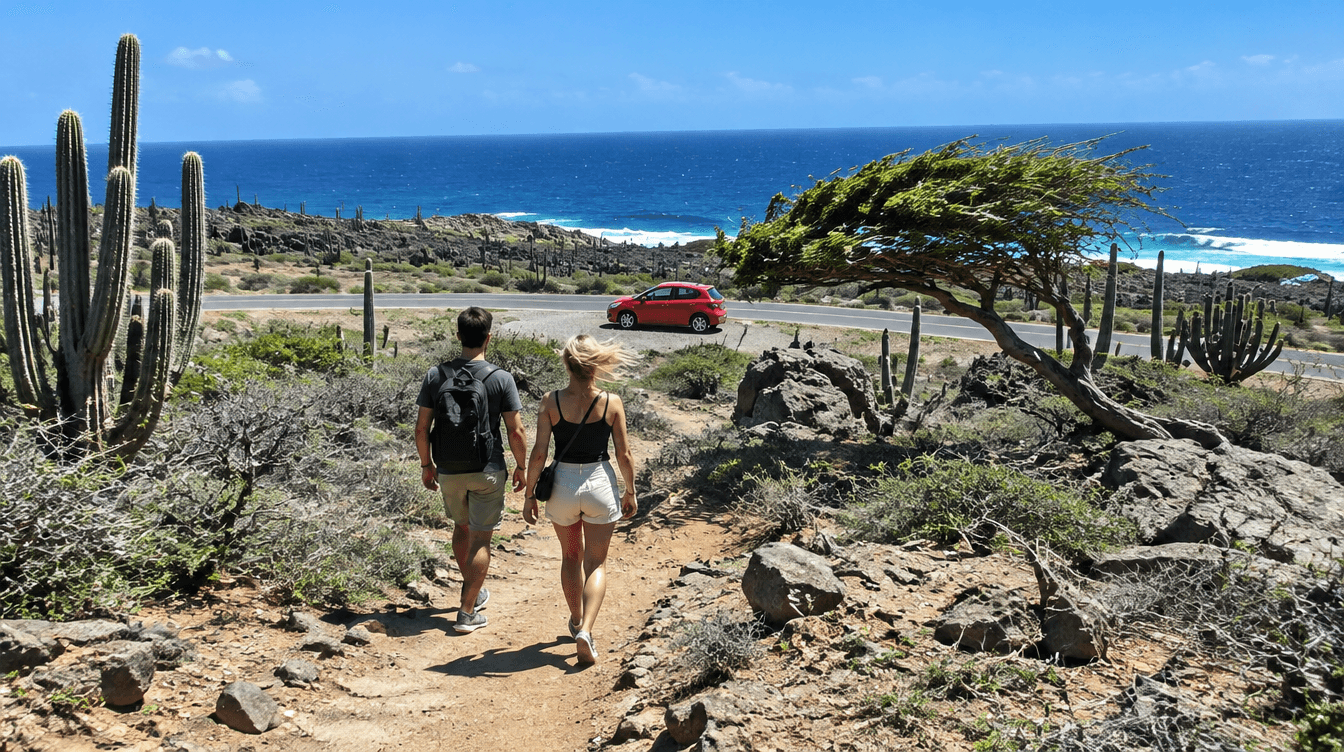
The landscape follows the climate. Away from the hotel strip you find cacti, rocky hills and dry scrub, especially in Arikok National Park. It looks more like a desert than a tropical island. Some visitors love that, others miss the green.
Barbados: green island with a wet season
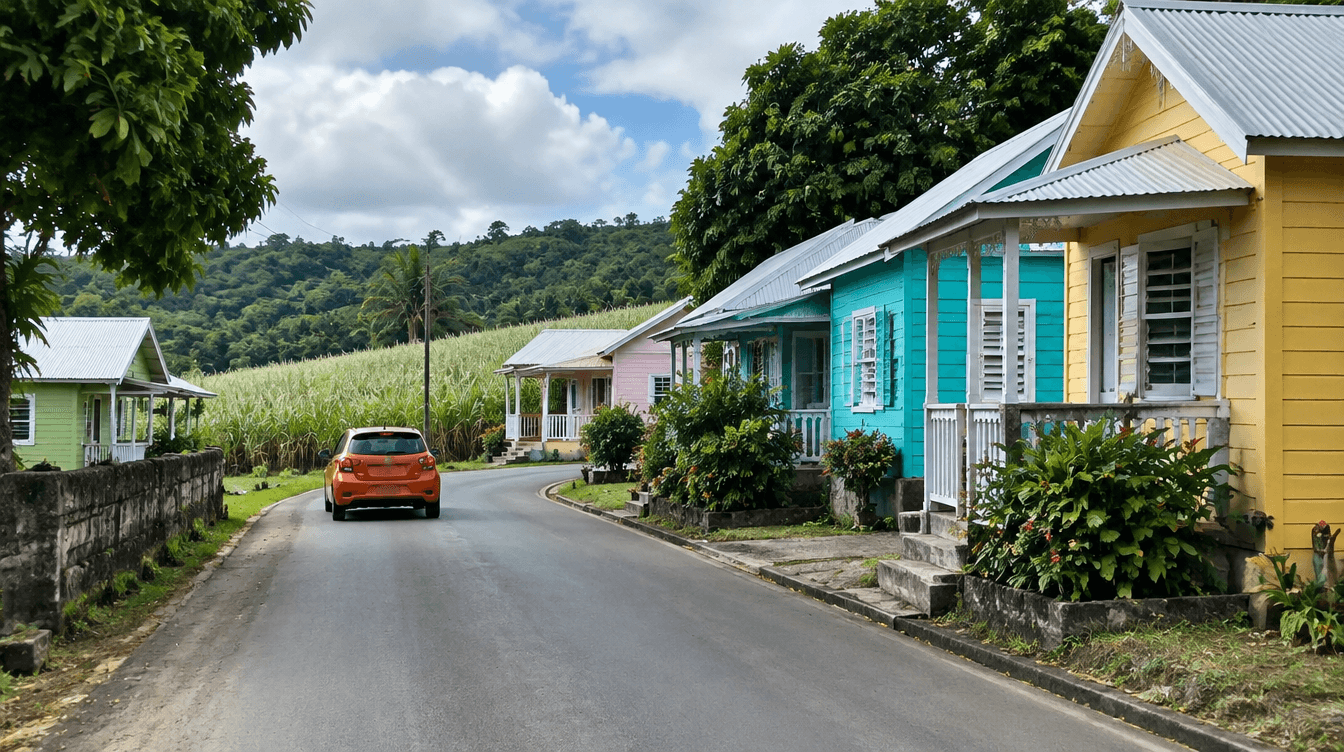
Barbados gets a lot more rain, and you see it everywhere. Sugar cane fields, gullies full of tropical plants and rolling green hills cover the interior. The dry season runs from about mid December to April or May. The wet season, from June to November, brings short and heavy showers that are usually followed by sun. Daytime highs sit around 30°C (86°F), and the sea stays between 26 and 29°C all year. North-east trade winds keep the air moving on most days.
If you visit in the wet season, a car helps. When a shower rolls in over the west coast, you can drive to the other side of the island or wait it out somewhere dry, instead of standing at a bus stop. Our guide to the best time to visit Barbados covers each period, including Crop Over in July and August.
Hurricane season on both islands
Atlantic hurricane season officially runs from 1 June to 30 November on both islands, with the peak from August to October. The difference lies in position. Aruba sits well south of the main hurricane belt. According to the island's tourism board, it has not taken a direct hurricane hit in records going back to 1851. Passing storms can still bring a day or two of heavy rain and rough seas.
Barbados sits on the southern edge of the belt. Direct hits are rare, but tropical storms that pass nearby can bring strong wind and heavy rain. If you travel between August and October and weather is your top concern, Aruba is the safer bet. If you pick Barbados in those months, book flexible flights and hotels and check the forecast before you fly. On TropicDrive you can cancel your rental car for free up to 48 hours before pickup on both islands, which takes some pressure off.
Beaches and landscape: how each island feels
Aruba: wide, white and calm
Aruba's famous beaches sit on the sheltered west and southwest coast. Eagle Beach is wide and quiet, with the well-known fofoti trees leaning over the sand. Palm Beach is the busy strip lined with high-rise hotels, water sports and beach bars. Baby Beach at the southern tip is a shallow bay where small children can stand in the water. Arashi Beach in the far northwest is good for snorkeling and sits close to the California Lighthouse.
The water on these beaches is usually calm and clear, and the sand is soft and white. The north and east coast looks completely different, with waves, cliffs and dunes where swimming is unsafe. Inside Arikok National Park some tracks need a 4x4, and the Natural Pool is reached only by a rough off-road trail. Our guide to driving in Aruba explains which roads a normal rental car can handle.
Barbados: three coasts, three moods
Barbados packs more variety into a short drive than most visitors expect. The west coast around Holetown and Speightstown has calm water and beaches such as Mullins Beach. The south coast mixes easy swimming at Accra Beach with the nightlife of St Lawrence Gap and the Friday night fish fry at Oistins. Carlisle Bay, right next to Bridgetown, has calm water and shipwrecks you can snorkel.
The east coast faces the open Atlantic. At Bathsheba, huge rock formations stand in the surf, and at Crane Beach the sand has a pink tint and the waves are strong. You come here to walk, look and take photos rather than swim. Inland you find Harrison's Cave, deep gullies, old plantation houses and rum distilleries. Bridgetown itself is a UNESCO World Heritage Site, listed as Historic Bridgetown and its Garrison. Our guide to the best beaches in Barbados by car sorts every beach by coast and swimming conditions.
The trade-off is easy to sum up. Aruba gives you classic white sand beaches in one compact zone, close to the hotels. Barbados gives you more range, with calm bays, wild surf and far more to do away from the sand.
Driving in Barbados vs Aruba
Driving is the biggest practical difference between the two islands, and it is worth thinking about before you book.
Barbados: left side, roundabouts and narrow roads
In Barbados you drive on the left, as in the UK, and most rental cars are right-hand drive. For drivers from the US, Canada or mainland Europe, that takes an hour or two to feel natural. The island has many roundabouts. Traffic already on the roundabout, coming from your right, has priority. Main highways link the airport, Bridgetown and the west and south coasts. Inland roads are often narrow, winding and steep in places, with few road markings.
Expect company on the road. Government buses, private minibuses and the route taxis known as ZR vans stop often and pull out with little warning. Around Bridgetown, traffic gets busy at rush hour. Drive at a calm pace, keep left on narrow bends and let faster local drivers pass. Our page on driving in Barbados and the left side rules covers seatbelts, phones, parking and roundabouts in more detail.
Aruba: right side and wide roads
Aruba drives on the right, the same as the US, Canada and most of Europe. Roads in the tourist half of the island are paved, well marked and generally in good condition. There are plenty of roundabouts here too, and traffic already on the roundabout has priority. One main road, L.G. Smith Boulevard, connects the airport, Oranjestad and the hotel areas, so your first drive is usually simple.
The exception is the rugged northeast. Inside Arikok National Park some routes are unpaved and rough, and standard rental terms often exclude them. If the Natural Pool is on your list, pick a 4x4 and read the rental terms first.
Licenses, levy and paperwork
Paperwork is light on both islands. In Barbados, the Visitor Driving Permit was abolished on 15 October 2025, so a valid driver's license from your home country is enough. Some rental companies ask for at least 2 years of driving experience.
Barbados also charges a Car Rental Levy of BBD 5 per day, up to a maximum of BBD 35 per rental, at the time of writing. That works out to US$2.50 per day and no more than US$17.50 for the whole rental. The Barbados Revenue Authority publishes the official details, so check there before you travel.
In Aruba, a valid license from the US, Canada, the UK or the EU is accepted, and you do not need an international permit. Bring your passport to pickup. On both islands, minimum age and deposit rules differ per rental company, so read the terms on each car before you book.
Prices, flights and getting around
What a rental car costs on each island
At the time of writing, TropicDrive's own island pages showed the starting prices below. They include taxes and insurance, and they change by date and availability.
| Car type | Barbados, from per day | Aruba, from per day |
|---|---|---|
| Economy | About US$56 | About US$65 |
| Compact SUV | About US$86 | About US$102 |
The Barbados figures come from a 7-day search from the airport. The Aruba figures are for the quieter months, with the SUV price based on a week in November. Both island pages warn that December to April can cost 30 to 50 percent more. When we checked, Barbados came out slightly cheaper for the same type of car. Run a live search for your own dates before you decide.
In the search results you can filter by car type, price and options such as no credit card. Minimum age, deposit and payment rules differ per local rental company, so check them on each car. For a full Barbados budget with fuel, the levy and taxi comparisons, read how much car rental costs in Barbados.
Getting there
Flights shape the choice for many travelers. Barbados, served by Grantley Adams International Airport (BGI), has long had direct flights from the UK, along with routes from the US East Coast and Canada. Aruba, served by Queen Beatrix International Airport (AUA), has frequent nonstop flights from many US cities and direct links with the Netherlands. Routes and schedules change by season, so compare flights for your dates first. A cheaper or shorter flight to one island can outweigh a small difference in hotel or car prices.
Both islands use Atlantic Standard Time all year. That puts them one hour ahead of New York in winter and on the same time in summer.
Do you need a car on both islands?
On both islands a car gives you freedom, but the reasons differ. In Aruba, public buses link Oranjestad with the hotel areas, and many visitors stay on Palm Beach or Eagle Beach. A car becomes useful the moment you want Baby Beach, Arikok National Park, the California Lighthouse or quiet beaches away from the hotels.
In Barbados, distances are short but the sights are spread over three coasts and the interior. The government bus costs a flat BBD 3.50 per ride, but many routes run through Bridgetown. Taxis are not metered, so agree on the fare before you get in. For a week of beaches, caves and east coast views, a rental car usually works out cheaper than a string of taxi rides.
Still torn? Many travelers settle the question with flights and dates first, then let the weather decide. Whichever island you pick, booking your car before you land saves time at the airport and gives you a fixed price. One customer, Michael R., summed up his booking as easy, with great customer service. Search Barbados rental cars from the airport or compare rental cars in Aruba.
Frequently asked questions
Is Barbados or Aruba better for beaches?
Aruba has classic white sand beaches with calm water, such as Eagle Beach and Palm Beach, all close to the hotels. Barbados offers more variety, with calm swimming on the west and south coasts and dramatic Atlantic scenery on the east coast. Pick Aruba for easy beach days and Barbados for variety.
Which island has better weather, Barbados or Aruba?
Aruba is drier, with about 18 inches of rain a year and sunshine on almost every day. Barbados has a wet season from June to November with short, heavy showers that usually clear quickly. Temperatures are similar, with daytime highs around 30°C on both islands.
Do you drive on the left in Barbados and Aruba?
You drive on the left in Barbados, as in the UK, and on the right in Aruba, as in the US. Both islands have many roundabouts. In Barbados, give way to traffic already on the roundabout coming from your right.
Is Aruba safer from hurricanes than Barbados?
Aruba sits south of the main hurricane belt and, according to its tourism board, has no recorded direct hit since 1851. Barbados sits on the southern edge of the belt, where direct hits are rare. Hurricane season runs from 1 June to 30 November on both islands, so keep your plans flexible from August to October.
Is car rental cheaper in Barbados or Aruba?
At the time of writing, TropicDrive's island pages showed economy cars from about US$56 per day in Barbados and about US$65 per day in Aruba, taxes included. Prices change by date and availability, so run a live search for your own trip.
Do you need a car in Barbados and Aruba?
You can manage without one on either island, but a car makes exploring much easier. In Barbados the sights are spread over three coasts and taxis are not metered. In Aruba a car gets you to Baby Beach, Arikok National Park and quieter beaches away from the hotel strip.


