
Driving in Curaçao: Rules, Roads and Tips for US Drivers

Driving in Curaçao feels familiar the moment you pull out of the airport. You sit on the left, the traffic keeps to the right, and the road signs use symbols you already know. The differences show up a few minutes later. Speed limits are posted in kilometers per hour, roundabouts replace many of the intersections you are used to, and a speed bump can appear right after a blind curve. None of it is hard. It just helps to know what is coming before you land.
This guide covers what a US driver needs on the island: the rules, the road conditions, fuel, parking, Willemstad's bridges and the pickup process. Prices come from TropicDrive's local rental partners, and the rules reflect what local rental companies and Curaçao's tourism sources tell visitors. Confirm anything license-related with your rental company before you travel, since requirements can change.
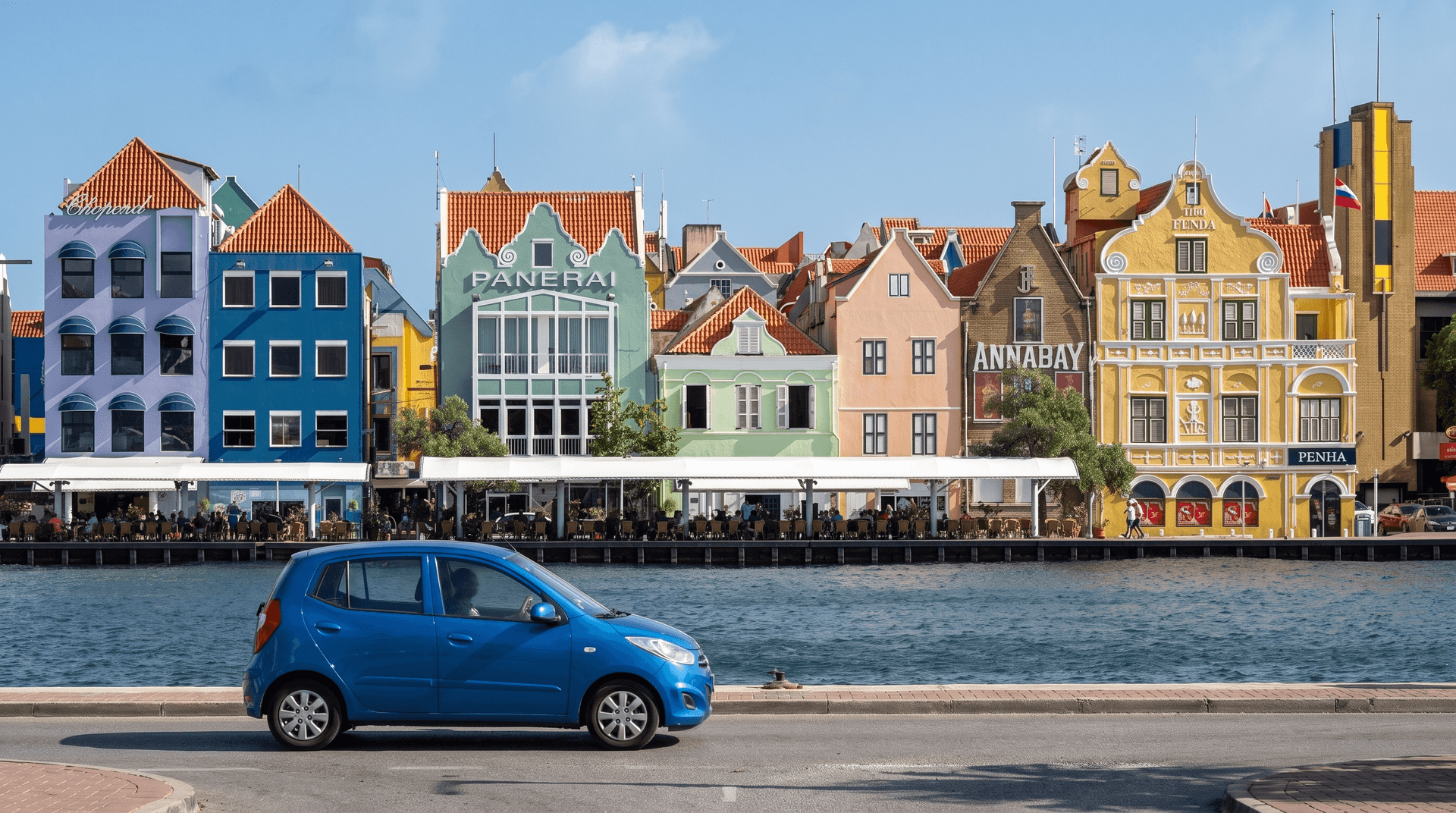
Driving in Curaçao: what US drivers need to know first
Curaçao is a Dutch Caribbean island about 61 kilometers (38 miles) long. Traffic drives on the right, exactly like in the United States. Your steering wheel is on the left, your turn signal is where you expect it, and automatic transmissions are standard on most rentals. That alone removes the biggest fear most first-time visitors have about driving abroad.
Most visitors stay around Willemstad or Jan Thiel on the east side. The best beaches sit on the west coast, 30 to 45 minutes away. Public transport does not reach most of them, which is why nearly every visitor ends up renting a car. A rental also lets you leave the hotel when you want, stop at a roadside stand, and skip the crowds at the popular beaches.
Which license do you need?
Rental companies on the island generally accept a valid US driver's license for visitors. Your license has to be current and printed in English. Some companies ask for an international driving permit if your license is in another language or script. If you are unsure, ask your rental company at booking. A short email now saves a conversation at the counter later.
Age rules matter more than the license for many travelers. Most companies set a minimum age and add a surcharge for younger drivers. We cover that in detail in our guide on the minimum age to rent a car in Curaçao.
Rules of the road in Curaçao
Curaçao's traffic rules are close to the Dutch ones, adapted to island conditions. You will find the logic straightforward after the first ten minutes.
Speed limits in kilometers and miles
Every speed limit is posted in kilometers per hour. Here is what you will see most often.
- In towns and built-up areas the limit is 40 km/h, about 25 mph.
- On roads outside the built-up areas the limit is usually 60 km/h, about 37 mph.
- On the faster main roads it can reach 80 km/h, about 50 mph.
- Posted signs overrule any rule of thumb, and limits change quickly near schools and villages.
Set your speedometer to show both units if your rental allows it. Most modern cars have a switch in the settings menu. If yours does not, remember one shortcut: multiply the kilometer number by 0.6 to get miles per hour.
Roundabouts
You will meet more roundabouts here than at home. The rule is simple. Yield to traffic that is already in the circle, enter when there is a gap, and signal when you exit. Some roundabouts have two lanes, and local drivers use the outer lane to exit. Take your time on the first one. By the fifth you will not think about it.
Phones, seat belts and alcohol
Seat belts are required for the driver and all passengers. Child seats are required for young children, so request them when you book. Using a handheld phone while driving is not allowed, so mount your phone and run the navigation on speaker or on the car screen. Drinking and driving is illegal and the best advice is simple. If you plan to drive, skip the drinks.
The beach bars on the west coast pour generous cocktails. Plan on a designated driver or taxi for the evening, and keep the car keys for the daytime.
Mistakes US drivers make in the first days
Three habits trip people up. The first is reading a kilometer sign as miles and driving too fast. A 60 sign means about 37 mph, not 60. The second is hesitating at roundabouts. Hesitation causes more near misses than speed does, so enter with a clear plan and commit to it. The third is leaving valuables on the passenger seat while you swim. A locked car with a bag in view is an invitation. Put the bag in the trunk before you arrive at the beach, not after you park, so nobody sees you do it.
Everything else is routine. Park, lock, walk, swim, drive home. Locals do it every day, and so will you after the first afternoon.
Road conditions across the island
Main roads between Willemstad, Jan Thiel and the airport are paved and in decent shape. The challenge begins when you turn off them. Our local partners describe the island's road quality as mixed, which is fair. Here is what to expect.
Speed bumps and potholes
Speed bumps sit in places you do not expect, often right after a curve. They appear on main roads as well as in small villages. Watch for the painted triangles or the signs and ease off the gas early. Some inland roads have potholes after heavy rain. A compact car handles all of this at low speed. If you want more clearance for the dirt roads to the west-coast beaches, a small SUV is the more relaxed choice.
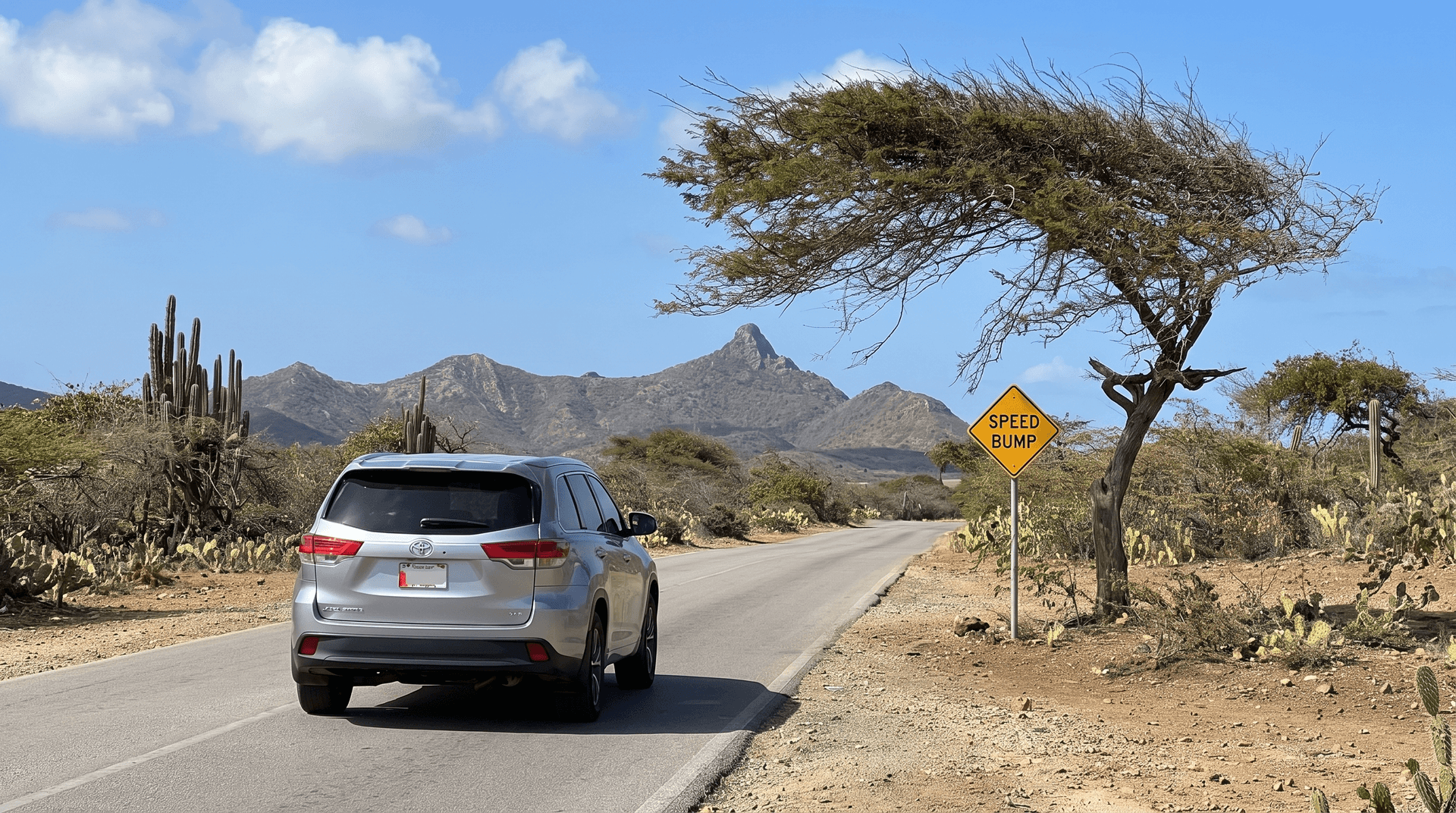
The west coast and unpaved roads
The roads to the west coast are paved most of the way. A few access roads to individual beaches turn to gravel for the last stretch. Cas Abao, Grote Knip, Kleine Knip, Porto Mari and Playa Lagun are all reachable by regular rental cars when you drive carefully. Take the gravel slowly, keep your distance from other cars to avoid flying stones, and park where other cars are parked.
Rain makes the roads slippery, especially on the dusty surfaces. Add following distance and avoid sharp braking. Rainfall is limited on Curaçao, but when it comes it can arrive quickly.
Animals, cyclists and night driving
Goats, iguanas and the occasional donkey cross rural roads. They do not read signs. Drive at a speed that lets you stop. Cyclists share the roads near Willemstad and Jan Thiel, particularly on weekends. On the rural roads, street lighting is minimal, so plan to be back on the main roads before dark. The drive from the west coast to Willemstad takes 30 to 45 minutes, so leave the beach with daylight to spare.
Pickup, fuel and parking
The practical side of driving in Curaçao is easy once you do it once. Here is the sequence that works.
Picking up at the airport
Curaçao International Airport (CUR) sits on the north side of the island, about 15 to 20 minutes from Willemstad. Many local companies meet you at arrivals or run a short shuttle to their office. International chains have desks in the terminal. Both options work, but local companies are typically much cheaper. Local rentals start at $25 to $35 per day for an economy car, compared with $50 to $70 per day at an international chain's airport desk.
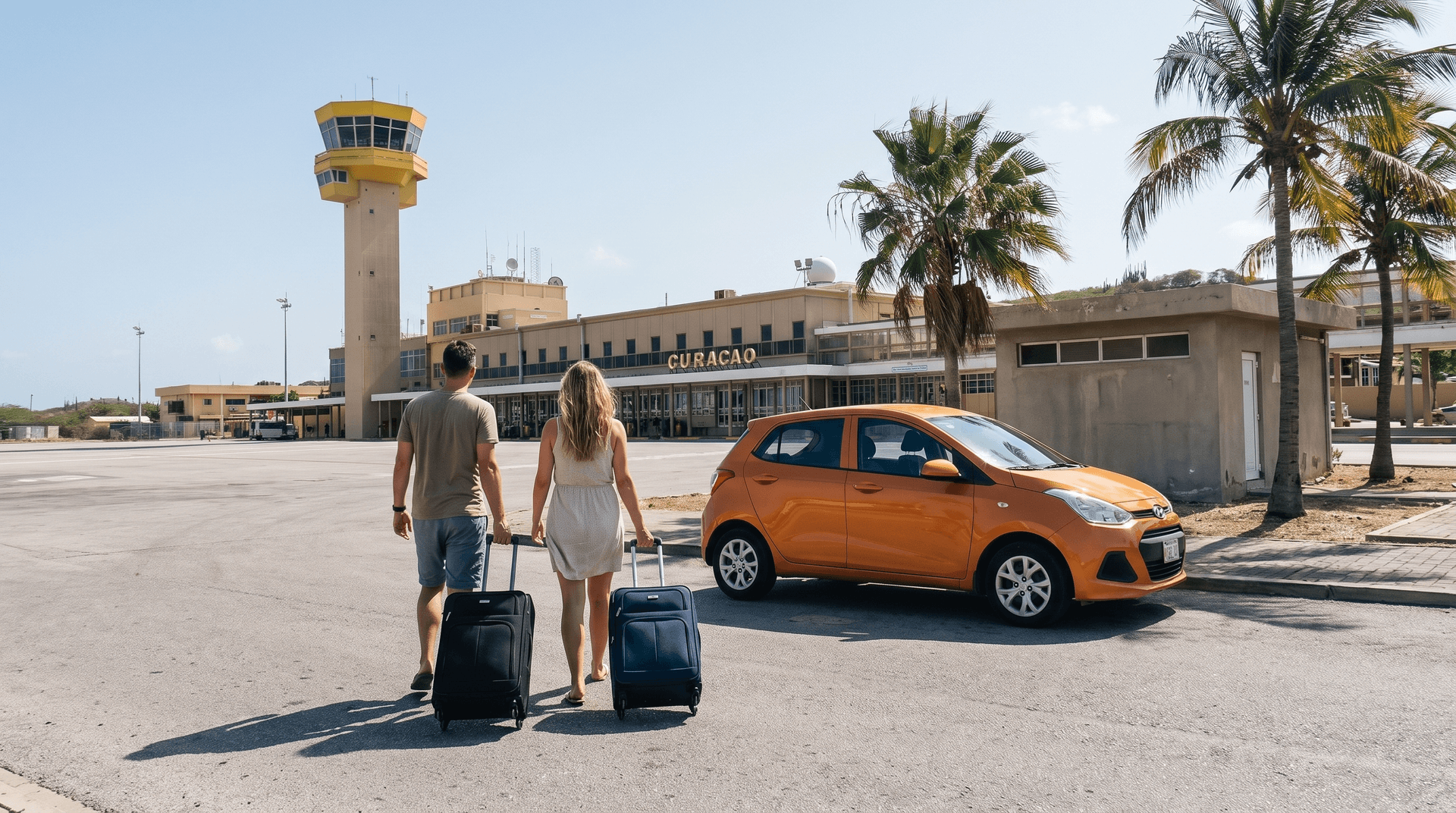
Before you drive away, walk around the car with the agent and photograph every scratch. Check the spare tire, the air conditioning and the fuel level. Ask how to reach the company if you have a problem, and save that number in your phone. For a full walk-through of the airport process, read our guide on car rental at Curaçao Airport. The airport also publishes arrival information on hato.aero.
Navigation and phone signal
Google Maps, Waze and Apple Maps all work well on the island. Download the Curaçao map for offline use before you leave the hotel Wi-Fi, because coverage can drop on the west coast and on small inland roads. Check your phone plan before you fly, since roaming charges from US carriers vary. Many visitors buy a local eSIM or rely on offline maps. Either way, set your route before you start the car, not while you are rolling.
Fuel and gas stations
Gas stations are easy to find around Willemstad and the east side. On the west coast they are less frequent. Fill the tank before you head to the beaches, and fill up again before you return the car if the contract requires it. Many stations ask you to pay inside first. Tell the cashier how much you want and fill up to that amount. If you pay more than you pump, go back inside for the change.
Carry some cash for small purchases. The Antillean guilder (ANG) is the local currency, and US dollars are widely accepted. Cards work at most stations, but the card reader sometimes fails at the smallest ones.
Parking
Parking is free at nearly all beaches and attractions. In central Willemstad, in the Punda and Otrobanda areas, you pay for parking, and numbered bays require a payment. Park in a designated area and follow the local signs. Theft from parked cars happens at beaches and in towns. Leave nothing visible in the car, not even a towel or a charger cable. Take your valuables with you.
A sample west-coast day by car
Leave Jan Thiel around 8.30 and drive west on the main road. Reach Playa Lagun by about 9.30 for calm water and snorkeling while the sun is still low. Move on to Porto Mari for lunch and a second swim. Head to Grote Knip in the afternoon, or Kleine Knip if you prefer a quieter beach. Start the drive back by 4.30 so you reach the main roads in daylight. Fill the tank before you leave the east side, because stations thin out along the way. The whole loop is easy in a compact car as long as you drive the gravel patches slowly.
Driving in Willemstad: bridges and one-way streets
Willemstad is a UNESCO World Heritage city and the one place where driving can feel tight. The old center is split by the Sint Anna Bay, with Punda on one side and Otrobanda on the other. Two bridges connect them.
The Queen Emma Bridge is the floating pedestrian bridge. It swings open to let ships pass, and cars cannot use it. The Queen Juliana Bridge is the tall fixed bridge that carries traffic over the bay. It rises high above the harbor, with a steep climb and a long descent. Drivers who are nervous about heights sometimes find it intimidating. It is wide, well maintained and very safe.
The streets in Punda and Otrobanda are narrow and many are one-way. Parking is tight. The easiest approach is to park at the edge of the center and walk. The Handelskade waterfront with its pastel buildings is a short stroll from the parking areas. If you want to see the best of the city without the stress, go in the morning, park once and explore on foot.
What a rental costs and how to book
A local rental is one of the best values in the Caribbean. TropicDrive compares more than 30 vetted local rental companies in one place, with live availability and clear prices. Our guests save up to 60% compared with airport counter prices. Sarah M. told us she saved over $200 compared to airport prices, and that the local company was fantastic.
| Category | Local rental, from per day | International chain at the airport, from per day |
|---|---|---|
| Economy | $25 to $35 | $50 to $70 |
| Compact | $30 to $40 | $55 to $75 |
| Midsize | $35 to $50 | $60 to $85 |
| SUV or Jeep | $45 to $75 | $80 to $120 |
| Minivan, 7+ seats | $60 to $90 | $100 to $150 |
These are starting prices in low and mid season. During Christmas, New Year's and Carnaval, expect prices 30 to 60% higher, so book early. You reserve online, pay only a small part upfront and the rest at pickup, and you can cancel for free up to 48 hours before arrival. Payment is secure through Stripe. Insurance terms vary by company, and our explainer on CDW insurance in Curaçao shows what to check before you sign.
Michael R. said the booking process was easy and the customer service great, and that he would use TropicDrive again. That is the goal. You compare, you book and you arrive with a confirmed car.
Which car suits your trip?
A compact or economy car is enough for Willemstad, Jan Thiel and the main beaches. A small SUV gives you more comfort on the gravel access roads and the potholed inland routes. If you want an open-air trip, see our page on Jeep rental in Curaçao. For a full overview of how renting works on the island, our ultimate guide to local car rental in Curaçao answers most of the remaining questions, and our guide to Curaçao's best beaches by car helps you plan the days.
You can also compare cars and prices directly on the Curaçao page. For official visitor information about the island, see Curaçao Tourist Board.
Frequently asked questions about driving in Curaçao
Do they drive on the left or right in Curaçao?
They drive on the right, the same as in the United States. The steering wheel is on the left side of the car.
Is a US driver's license valid in Curaçao?
Rental companies generally accept a valid US license for visitors. Some ask for an international driving permit when the license is not in English. Confirm with your rental company when you book.
Is it safe to drive in Curaçao?
Yes. The main roads are in good condition and traffic is light outside Willemstad. Watch for speed bumps, roundabouts and animals on rural roads, and avoid unfamiliar back roads after dark.
What is the speed limit in Curaçao?
The limit is 40 km/h (about 25 mph) in built-up areas and 60 km/h (about 37 mph) outside them. Some faster roads allow up to 80 km/h (about 50 mph). Posted signs always take priority.
Do I need a 4x4 to drive in Curaçao?
No. A regular car reaches Willemstad, Jan Thiel and the main west-coast beaches. A small SUV or Jeep adds comfort on gravel and rough roads.
Where can I park in Willemstad?
Paid parking is available in central Willemstad, including numbered bays. Many visitors park at the edge of Punda or Otrobanda and walk. Parking at most beaches is free.
