
Best Time to Visit Aruba: Weather, Crowds and Car Rental Costs

Aruba has one of the steadiest climates in the Caribbean, so the best time to visit Aruba has less to do with dodging bad weather and more to do with what you want to pay, how many people you want next to you on the beach and how much wind you can stand. The island sits outside the hurricane belt, averages about 82°F all year and collects only 17 to 18 inches of rain a year, according to the Aruba Tourism Authority.
That leaves three real variables: crowds, prices and wind. This guide breaks the year into seasons with the numbers a US traveler needs when booking flights, a hotel and a rental car, including what a car costs when the island is full and when it is quiet.
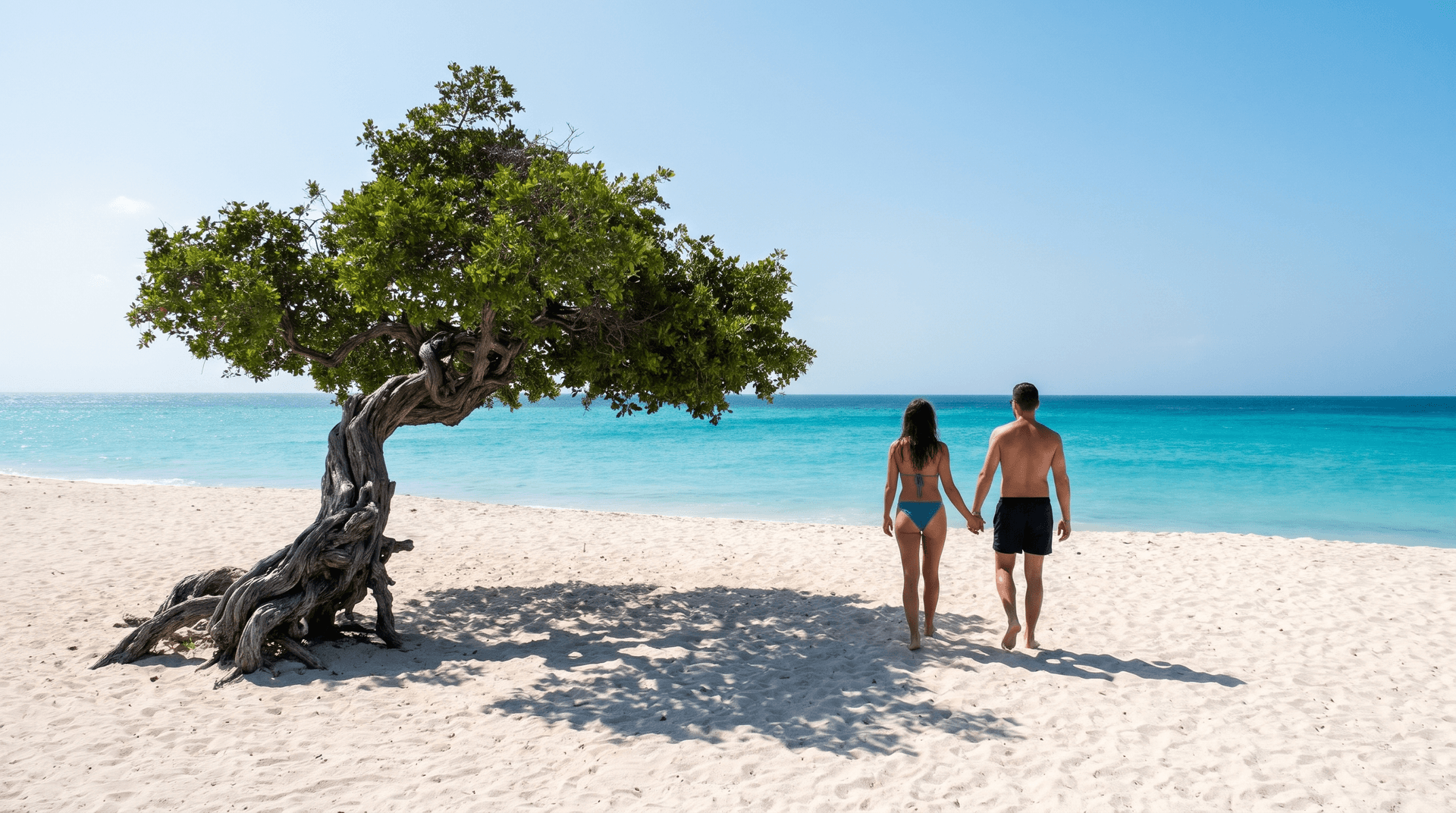
The Best Time to Visit Aruba Depends on What You Want
Start with your priority, because each one points to a different part of the calendar.
If you want guaranteed sun and the most going on, travel from mid-December to April. If you want the lowest prices and empty beaches, go from September to early November. If you want warm water, calm days and fewer crowds without the autumn showers, May and June are the sweet spot. And if wind sports are the point, late spring through summer delivers the strongest breeze.
No month is a bad month. Even the wettest weeks bring short showers that clear within the hour, and the sun shows up on most days of the year. The Aruba Tourism Authority puts it at roughly 360 sunny days. So the question is really about trade-offs, and the rest of this guide lays them out.
The short version
Peak season runs from about mid-December through April. Shoulder months are May, June and November. The quietest and cheapest stretch is September and October, with July and August in between because of US summer holidays.
Here is what that means for a typical week. A local economy car costs about $25 to $35 per day in a quiet month, so a seven-day rental lands between $175 and $245. During Christmas, New Year or Carnival, expect that to climb 30 to 60 percent, which pushes the same car to roughly $230 to $390 for the week. Dates move the price more than any other choice you make.
Aruba Weather Month by Month
Temperatures barely move. The official climate tables show a January average of about 82°F and a late-summer peak around 88°F in August and September. Water temperature stays comfortable for swimming the whole year. What changes is humidity, wind and the odd shower.
December to April: dry, busy and expensive
These are the driest months and the ones most travelers picture when they imagine Aruba. Daytime highs sit between 79°F and 86°F, the air feels less sticky than in summer and rain is minimal. The trade wind keeps Palm Beach and Eagle Beach pleasant even at noon.
It is also when the island fills up. Christmas and New Year are the single busiest stretch of the year, Carnival season runs through January and February, and spring break pushes numbers up again in March. If you are planning around those dates, read our month guides for December, January, February and March. Carnival 2027 peaks on February 6 and 7, and the full schedule is in our Aruba Carnival 2027 guide.
May to August: warm, windy and balanced
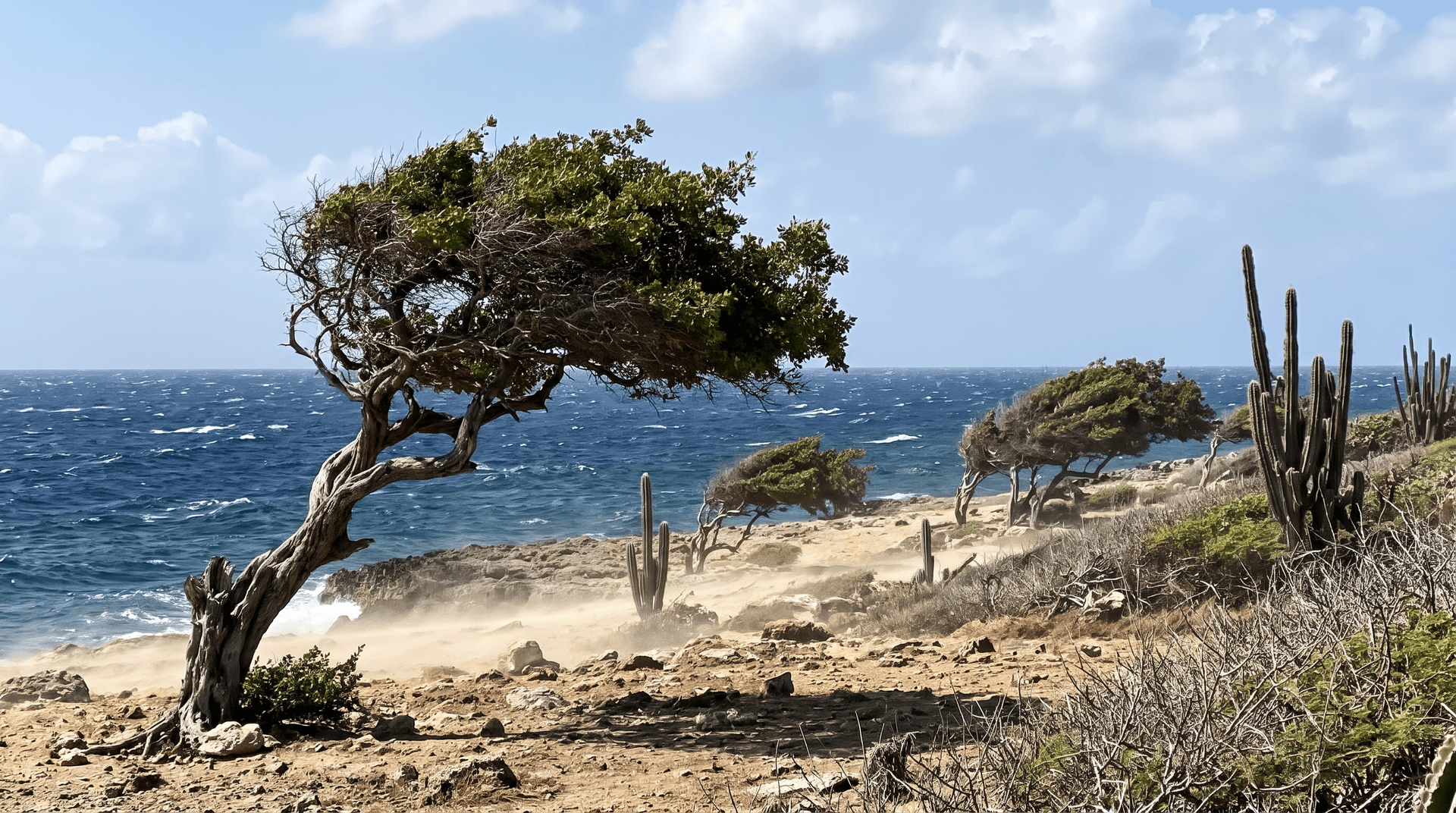
Temperatures climb to the high 80s and the wind picks up. Rain stays low, a little above the winter months but nothing you would plan around. The Aruba Tourism Authority notes the trade winds strengthen between May and October, which is why windsurfers and kitesurfers favor this window.
Crowds thin out in May and June. July and August bring US families on school holidays, so hotels and cars cost more than in the spring, though still below Christmas levels. Mid-May usually hosts the Aruba Hi-Winds competition at Palm Beach, but confirm the dates before you plan around it because organizers have moved them from year to year.
September to November: the quiet season
This is the wettest stretch, with October the rainiest month in the official table at about 1.3 inches. That number is small. A typical rainy day looks like 20 minutes of rain and then blue sky. It is also the cheapest time to travel and the quietest, with beaches that feel half empty.
Hurricane season officially runs June through November, and travelers sometimes worry about it for Aruba. The island lies south of the storm track, and a passing system far to the north mostly means calm air or a few showers. We cover the real risk data in our Aruba hurricane season guide. November also brings Restaurant Month, with special menus across the island, and prices begin climbing again toward December.
High Season, Shoulder Season and Low Season: Crowds and Prices
Crowds and prices move together, and both follow the US holiday calendar more than the weather.
What peak season really costs
Hotels and rental cars both price to demand. Between mid-December and April, the low-rise hotels on Eagle Beach and the resorts on Palm Beach fill up weeks in advance, and the rental fleet gets tight. Cars that cost $45 to $75 per day for a SUV or Jeep from a local company in a quiet month cost noticeably more in the Christmas to New Year window. International chains at the airport counter start higher still, at $80 to $120 per day for the same category.
Booking early solves most of this. TropicDrive shows live availability from more than 30 vetted local rental companies, so you can compare real prices for your dates in one search instead of calling around. Our Aruba overview is the fastest place to start.
Where the bargains are
The lowest rates show up from September to early November and again in May and June. If your schedule allows, a week in late May can feel like a high-season trip at a shoulder-season price. The weather is warm, the wind is steady and the beaches have room.
One trade-off to know about: some restaurants, tour operators and smaller businesses close for a week or two in the autumn low season. Check opening hours for anything you absolutely want to do, especially boat trips and the Arikok National Park guided tours.
Event calendar at a glance
A few events can shape your timing.
- Carnival season runs through January and February, with the big parades in early February.
- Aruba Hi-Winds typically takes place around mid-May at Palm Beach, confirm exact dates.
- The San Nicolas Art Fair is held in September.
- Restaurant Month runs in November.
- New Year's Eve fireworks make late December the island's busiest week.
Rental Car Prices and Booking Timing Through the Year
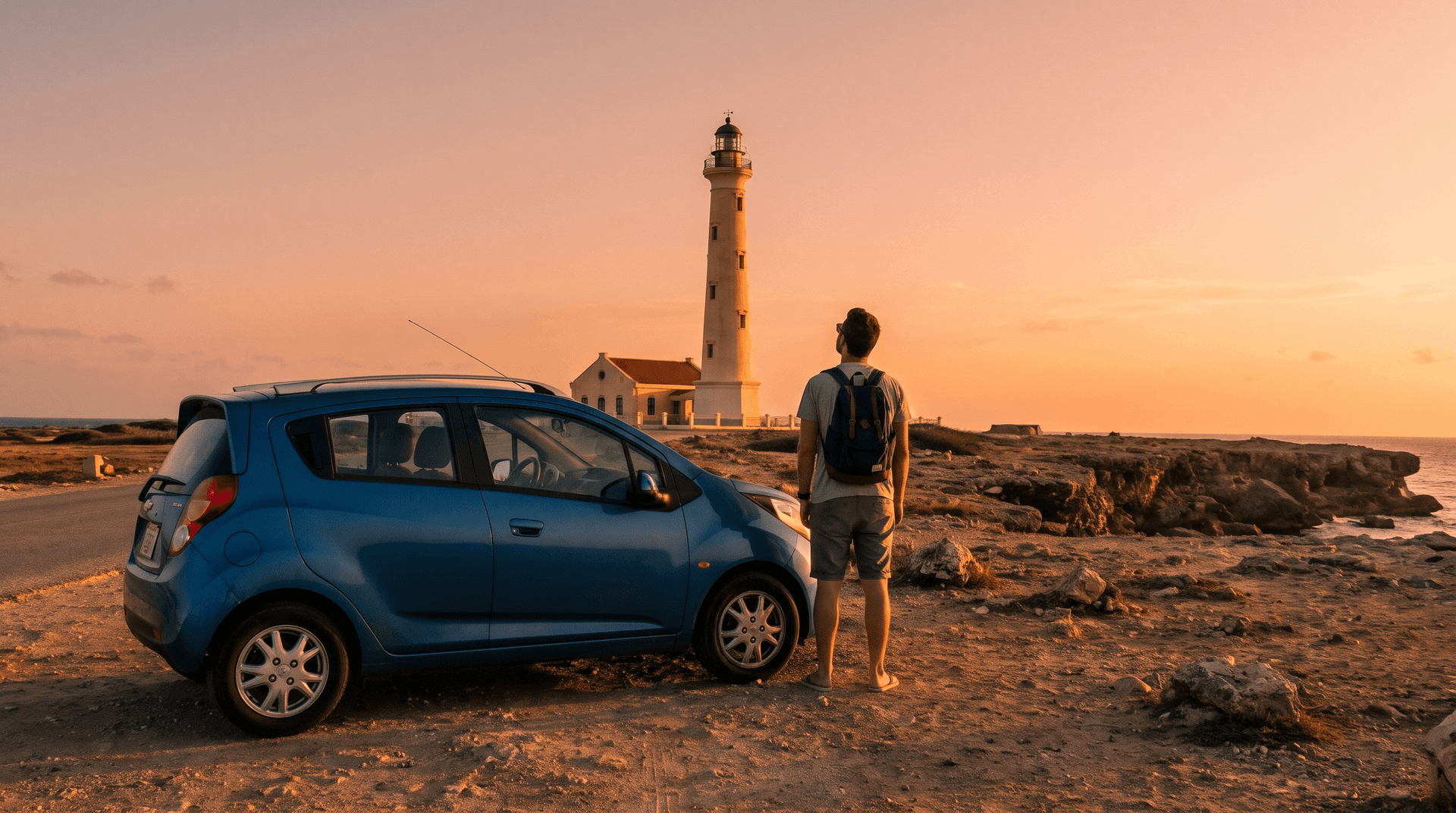
A car is the difference between seeing Aruba and staying near your hotel. The island is only about 20 miles long and 6 miles wide, but the best sights, from the California Lighthouse to Baby Beach to Arikok National Park, sit far from the hotel strip. Taxis between them add up quickly. If you are still deciding, our guide on whether you need a car in Aruba walks through the numbers.
Indicative daily prices by category
These are starting prices from local companies in low to mid season, compared with international chains at the airport counter. Treat them as a range, not a quote.
Economy cars start at $25 to $35 per day locally versus $50 to $70 at a chain. Compact cars run $30 to $40 versus $55 to $75. Intermediate sedans cost $35 to $50 versus $60 to $85. SUVs and Jeeps cost $45 to $75 versus $80 to $120, and minivans or seven-seaters cost $60 to $90 versus $100 to $150. Local rentals average about 60 percent below airport prices, which is where the savings add up on a week-long trip.
Peak periods, meaning Christmas, New Year and Carnival, run 30 to 60 percent above these ranges. Check our full Aruba car rental price guide for the detail by season.
When to book
For December through April, book as soon as your flights are confirmed. The cheap categories and the Jeeps go first. For May to November you can usually wait until a few weeks out, but there is no reason to leave it to the last minute since cancellation is free.
TropicDrive lets you cancel for free up to 48 hours before arrival, pay only a small part upfront and settle the rest when you pick up the car. Payment runs through Stripe with credit card, and there are no hidden fees at pickup. Sarah M. wrote, "Saved over $200 compared to airport prices. The local company was fantastic and the car was perfect." Michael R. added, "Easy booking process and great customer service. Will definitely use TropicDrive again."
If you are landing at the airport, our Aruba airport page explains how pickup works so you can skip the long counter lines.
Best Time to Visit Aruba by Type of Traveler
Here is how the seasons map to the way you travel.
Couples and honeymooners
Mid-January to early March gives you the driest weather and the most dining and nightlife. If you prefer privacy over buzz, choose May or early November. Sunsets from Eagle Beach look the same in every season, and quiet beaches matter more when there are two of you.
Families with kids
Summer works for school calendars. July and August bring warm, calm mornings, and Baby Beach on the southern tip has shallow water kids can stand in. March has spring break crowds, so book ahead if you pick it. A minivan or seven-seater helps once there are more than four of you, and our guide to renting a car in Aruba with family covers car seats and vehicle sizes.
Budget travelers
September and October are the cheapest weeks of the year for flights, hotels and cars. Combine a local economy car at $25 to $35 per day with a low-rise hotel and you can see the whole island for less than a mid-range hotel night in peak season.
Wind sports fans
Aim for May to September. The east-facing Hadicurari area near Fisherman's Huts is the classic kitesurfing and windsurfing spot, and the wind is most reliable then. Beginners can book lessons, and a rental car makes it easy to carry gear.
First-time visitors who want it all
Mid-April to early June is the compromise. You get post-spring-break calm, strong sunshine, rising winds and prices that have already started to drop. If you have some flexibility, this is the window we would pick.
Frequently Asked Questions
What is the cheapest month to visit Aruba?
September and October are usually the cheapest months. Crowds are at their lowest, hotels and rental cars drop to off-peak rates and local economy cars start around $25 to $35 per day. It is also the stretch with the most rain, though still only brief showers.
Is Aruba safe from hurricanes?
Aruba lies outside the main Atlantic hurricane belt, so direct hits are extremely rare. During hurricane season, which runs June to November, a passing storm to the north can bring calm air or a few showers, but the island rarely sees damaging weather.
When is the windiest time of year in Aruba?
The trade winds blow all year and average roughly 15 to 20 mph, but they are strongest from May through October. That is the best window for kitesurfing and windsurfing and the least comfortable for sunbathing on exposed east-coast beaches.
Do I need to book a rental car in advance for Aruba?
Yes for December through April, especially Christmas, New Year and Carnival weeks, when prices run 30 to 60 percent higher and the best cars sell out. In the quieter months you can often book a few weeks ahead, but booking earlier still gives you more choice. Our FAQ answers the common booking questions.
How many days do you need in Aruba?
Five to seven days covers the beaches, Arikok National Park, the California Lighthouse and the south coast without rushing. With a rental car, even a long weekend lets you see the main sights because the island is only about 20 miles long.
Does it rain much in Aruba?
No. Aruba gets roughly 17 to 18 inches of rain a year, less than Los Angeles. Showers usually pass within an hour, and rain all day is rare even in the wettest months of autumn. For a month-by-month look at rainfall and temperature, see the Visit Aruba weather guide.
When you have picked your dates, compare local rental cars on TropicDrive and see why travelers pick local companies over airport chains. You can also read why travelers book with us before you decide.


