
Aruba Natural Pool (Conchi): How to Get There in 2026

The Aruba Natural Pool is the one stop on the island that your rental car cannot finish for you. Locals call it Conchi. It sits on the wild east coast inside Arikok National Park, a ring of volcanic rock that holds a calm basin of water while the Atlantic breaks against the outside wall. The photos make it look easy. The road does not.
This guide covers what the trip really involves in 2026. Which vehicle gets you there, what guided tours cost, how to read the water before you step in, and how to build a day around it without burning your best hours on the wrong road. If you want the short answer first, here it is. A regular economy car stops short of the pool. A real 4x4 reaches it on a rough, rocky track. Everyone else books a tour or hikes the last stretch.
What the Aruba Natural Pool actually is
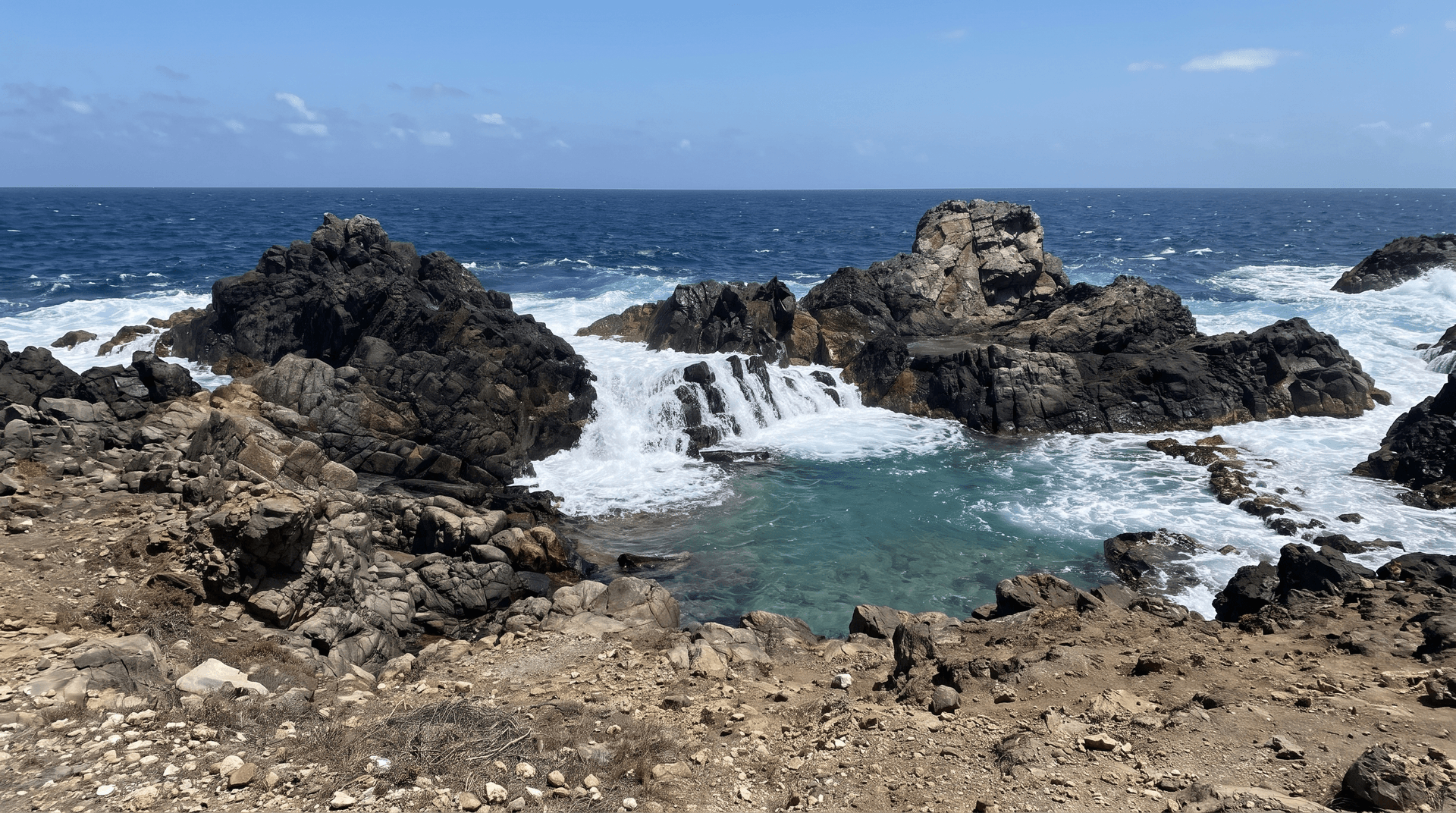
The Aruba Natural Pool is a rock pool carved into the volcanic coastline on the island's east side. Waves hit the outer rocks and the water inside stays calmer, which is why people swim there. It is not a beach. There is no sand to lay a towel on, no beach bar and no shade structure waiting for you. You get rock, water, wind and a view that looks nothing like the west coast resorts.
That contrast is the point. Aruba is about 30 kilometers long and 6 kilometers wide, and most visitors never leave the strip between Palm Beach and Eagle Beach, where the water is flat and the sand is soft. The east coast plays by different rules. The trade wind blows hard, the surf is heavy and the landscape turns to cactus, limestone and dry scrub. The Natural Pool is the most photographed corner of that side of the island.
Where it sits inside Arikok National Park
Arikok National Park covers roughly 20 percent of the island, according to the Aruba Tourism Authority. The park is open daily from 8:00 AM to 4:00 PM, and you buy a day pass at the visitor center. The Natural Pool lies inside the park boundary, so any plan for the pool is also a plan for a park day. If you want the full picture of what a regular car can and cannot reach in Arikok, read our Arikok National Park by car guide first.
The pool itself is free to visit, but the park access, the vehicle and any guide are separate costs. Plan your budget around those three items, not around the pool.
Why the west coast habits do not apply here
On the west coast you can park beside the sand, walk ten steps and swim. At the Natural Pool you need to think about footing, wind, wave size and distance from help. There are no facilities at the site. Nobody sells water or sunscreen. Phone signal is not something to count on in the more remote parts of the park. Treat this as a small expedition and you will enjoy it far more than if you treat it as a beach stop.
Getting to the Aruba Natural Pool: 4x4, tour or hike
There are three realistic ways to reach the pool. Each one suits a different traveler, and the right choice depends on how much you want to drive, how much you want to plan and how comfortable you are on rough ground.
Option one: drive yourself in a real 4x4
The track to the pool is rough, rocky and uneven. Vehicle access requires genuine four-wheel drive, and regular rental cars cannot make the trip. That includes the compact SUV look-alikes that have no low range and little ground clearance. If a vehicle is marketed as a crossover, ask the rental company directly whether it is cleared for unpaved park roads. Many are not.
Driving yourself gives you control over timing. You can arrive early, stay as long as the sea allows and leave before the heat peaks. It also means you carry every risk yourself, from a flat tire to a stuck wheel. Bring a spare that is actually inflated, ask the supplier where the jack and wrench are, and tell someone at your hotel where you are going.
A Jeep is the classic choice. Our Aruba Jeep rental guide explains where a 4x4 is genuinely required and what to ask before you sign.
Option two: join a guided tour
Most visitors reach the pool this way. Listed guided tours range from about $59 to $310 per person, or per two-seater on UTV-style tours. The spread is wide because tours differ in vehicle, group size, length and extras. A basic shared jeep convoy sits at the low end. A private or small-group tour with a hike, snorkel stop and drinks sits at the high end.
A tour removes the vehicle problem, the insurance question and the navigation. You also get a guide who reads the sea on the day and knows when the pool is safe. The trade-off is a fixed schedule. You swim when the group swims, and you leave when the group leaves.
Before you book, ask what the price includes. Park entry is the item most often handled differently from one operator to the next. Also ask whether the tour runs if the sea is rough, and what the refund policy is when the pool is closed. Check current park rules about off-road vehicles with the visitor center, since access rules for different vehicle types can change.
Option three: hike the last stretch
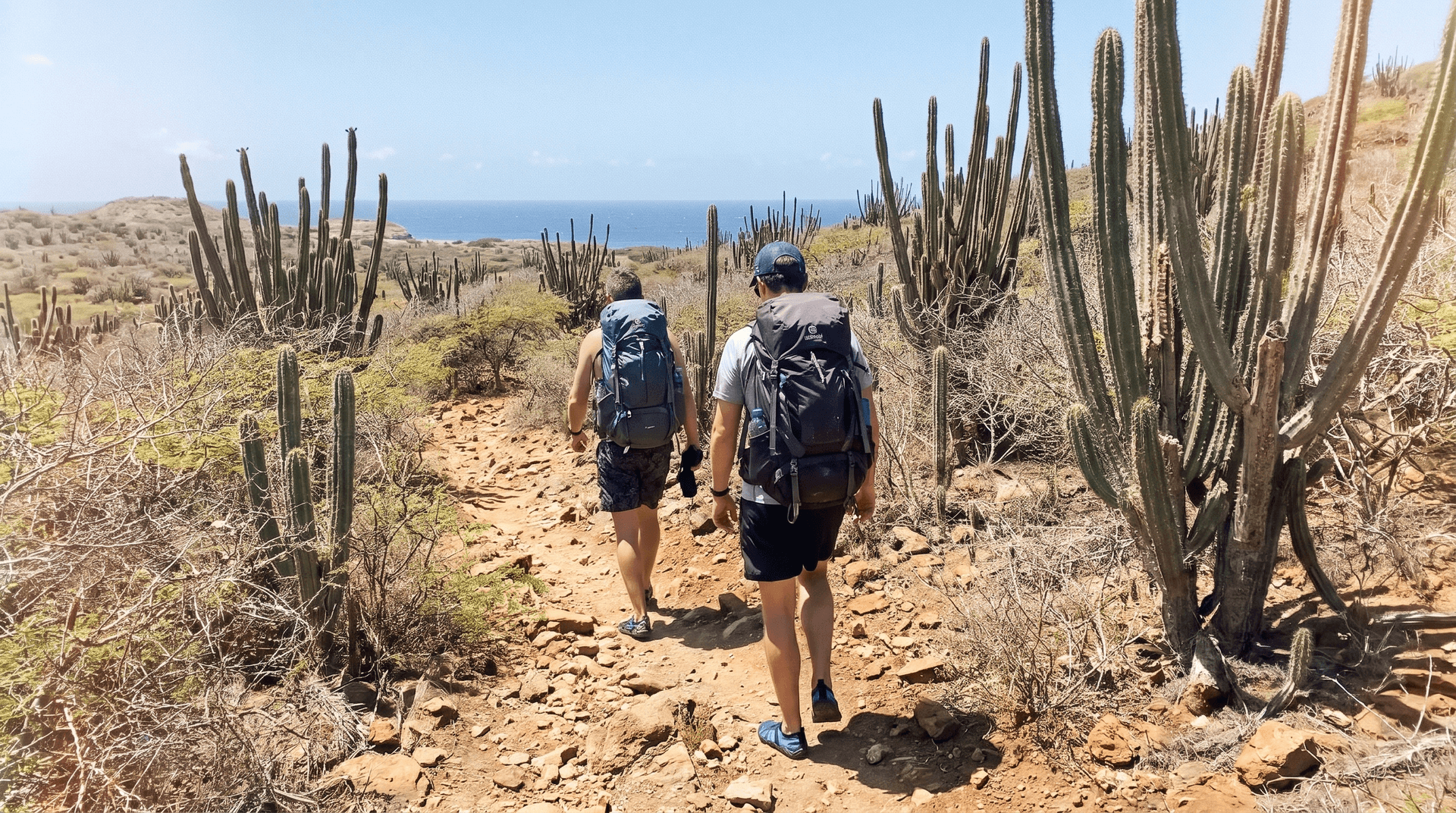
Hiking is possible from the park road, but it is described as an advanced-level effort. The ground is uneven, the sun is strong and there is little shade. This option suits fit travelers with proper shoes, plenty of water and a sense of how heat affects them. Start early and carry more water than you think you need.
If you hike, you can still use a normal rental car to reach the park. That saves the cost of a 4x4 for the day, but it adds hours of walking in dry heat. Be honest about your group. A family with young children will usually be happier on a tour than on foot.
Renting the right vehicle for the Aruba Natural Pool
If you decide to drive yourself, the vehicle matters more than anything else on this list. A cheap economy car saves money on paper and costs you the whole excursion in practice.
What a 4x4 costs on Aruba
On TropicDrive, SUVs and Jeeps from local rental companies start at about $45 to $75 per day. Internationally branded companies at the airport counter start around $80 to $120 per day for the same category. Economy cars sit at $25 to $35 per day with local companies, which is why many travelers book one for the week and add a Jeep for a single day. Prices are indicative, based on low to mid season. Peak periods such as Christmas, New Year and Carnival run 30 to 60 percent higher, so book early if your dates fall there.
Our Aruba car rental price guide breaks the costs down by vehicle type and season, including insurance and fuel.
Questions to ask before you book a Jeep
Three questions save most renters from trouble. First, is this vehicle allowed on unpaved roads inside Arikok National Park? Second, does the insurance cover off-road use, and what is my deductible if something goes wrong? Third, what is the tire and spare policy? Many standard rental policies exclude unpaved roads altogether, so a damaged tire or underbody can become your cost. Ask for the answers in writing.
TropicDrive works only with screened local rental companies, checked on registration, insurance and fleet quality. More than 30 local partners and over 1,000 cars sit on the platform, which means you can compare Jeeps side by side and read what each supplier allows. You see live availability, pay a small part online and settle the rest at pickup. Cancellation is free up to 48 hours before arrival.
Sarah M. put the value this way after her trip: "Saved over $200 compared to airport prices. The local company was fantastic and the car was perfect." Michael R. added: "Easy booking process and great customer service. Will definitely use TropicDrive again." Those are the two things that matter on a day like this, a fair price and a supplier who picks up the phone.
If you want to see what is available for your dates, start on the Aruba Jeep rental page and filter by pickup day.
Do you need a car for the rest of the trip?
Probably yes, even if you tour to the pool. Aruba is small, but the best stops are spread across the island and taxis add up fast. Our Do I Need a Car in Aruba guide walks through the numbers. Many travelers keep a cheap economy car for the whole stay and add a 4x4 only for the Arikok day.
Swimming at the Aruba Natural Pool safely
The pool looks calm in photos because photos freeze one moment. In real life the sea moves. The pool is protected from the open ocean, but waves can still wash over the surrounding rocks and push water in. Rangers may close the pool in extreme weather.
Read the water before you get in
Stand at the edge for a full two minutes before you swim. Watch the wave sets. If water regularly surges over the rim, wait or skip the swim. A pool that is flat at 8:30 AM can behave differently by midday as the wind builds. If you are unsure, take the photos and stay out. Nothing about this pool is worth a rescue.
Wet volcanic rock is slippery. Water shoes with a real grip make entering and leaving the pool far safer, and flip-flops are a bad idea on this terrain. Keep children within arm's reach at all times, and do not let anyone dive from the rocks.
What to pack
Pack as if you will be alone for hours. There are no facilities at the site.
- Water shoes with grip, plus closed shoes for the track
- At least two liters of water per person
- Snacks and a small first aid kit
- Reef-safe sunscreen, a hat and a light long-sleeve layer
- A dry bag for phones and car keys
- Fully charged phones and a printed or offline map
That list is short on purpose. Anything beyond it is weight you will carry over uneven ground.
Timing: why early morning wins
Arrive close to the 8:00 AM park opening. The water is calmer in the morning, the light is softer for photos and fewer people are around. By late morning the heat and the crowds both build, and tour convoys start to arrive. If you are on a tour, ask for the earliest departure slot. The price is often the same and the experience is better.
Planning your Aruba Natural Pool day around Arikok
The pool is the headline, but it should not be the whole day. A morning at the Natural Pool leaves your afternoon free for something easier, and the island is small enough to make that work.
A simple day plan
Start by filling the tank. Fuel stations are not frequent once you head toward the park, so top up before you leave the main roads. Reach the park near 8:00 AM, buy your day pass and head for the pool first while the sea is at its calmest. Spend an hour or so there, then move on before the heat peaks.
From there, you have good options. The south has Baby Beach, a shallow bay with warm water that works well after a rough-ground morning. The north has the California Lighthouse and its sunset view. If you have a free day, our one-day Aruba road trip itinerary strings these stops together by car.
What to skip
Skip the pool on days when the sea is rough. Skip it if you have no suitable vehicle, no tour and no appetite for a hike. Skip the idea that you can squeeze it into the last hour before a flight. Give the pool a proper morning, and give yourself a buffer in case the track or the sea decides otherwise.
Before you go, read the Aruba driving rules and roundabout guide. You drive on the right, speed limits are 40 km/h in built-up areas, 60 km/h outside them and 80 km/h on L.G. Smith Boulevard. Parking is free at most attractions and beaches, and there are no toll roads.
When you are ready to pick a vehicle, the TropicDrive Aruba page lets you compare local companies, see live availability and book online. Our why book with us page explains how we screen suppliers and what happens if the car is not right. Guests have booked more than 10,000 times with an average rating of 4.8 stars, and up to 60 percent savings compared with airport prices.
Frequently asked questions
Can I reach the Aruba Natural Pool in a regular rental car?
No. The final stretch is a rough, rocky off-road track that needs a real four-wheel drive. A regular rental car can get you to the park, but not to the pool. Book a Jeep or 4x4, join a guided tour or hike the last part.
How much does a Natural Pool tour in Aruba cost?
Listed guided tours run from about $59 to $310 per person, or per two-seater on UTV tours. The price depends on the vehicle, the group size and what the tour adds, such as snorkel stops or a hike. Compare what is included before you book.
Is it safe to swim in the Natural Pool?
The pool is shielded from the open sea, but waves can crash over the rocks. Check the water before you enter, wear water shoes and go early when the sea is calmer. Rangers can close the pool in extreme weather.
What is the best time of day to visit?
Early morning. The water is calmer, the light is softer and fewer people are there. The park is open from 8:00 AM to 4:00 PM daily, so plan to arrive close to opening.
Are there toilets, shops or food at the Natural Pool?
No. There are no facilities at the pool. Bring water, snacks, sun protection and water shoes, and fill the fuel tank before you leave the main road.
Does my rental insurance cover off-road driving to the pool?
Not always. Many standard policies exclude unpaved roads. Ask your rental company in writing whether off-road use in Arikok National Park is covered before you book a Jeep.
For current park information and visitor details, check the official Visit Aruba page on Arikok National Park and the Aruba Tourism Authority before you travel.


