
Driving in St Maarten: Rules, Bridge Traffic and Tips

You can drive from the Netherlands to France on St Maarten without ever seeing a border post. The island is split between Dutch Sint Maarten and French Saint-Martin, but the road just keeps going. That is the charm of driving in St Maarten. It is also where first-time visitors get caught out, because the traffic habits, the road signs and even the price tags change quietly as you roll over the invisible line. This guide covers the rules, the bridge that stops traffic on the airport road, the busiest hours, and how to pick a rental car that matches the roads you will actually use.
Driving in St Maarten: the rules that matter
You drive on the right, and the island follows continental European traffic law. If you drive in the US or Canada, the basics feel familiar. The details do not, and a few of them catch people every week.
Traffic coming from your right has priority at unmarked intersections. That is the default across the island, and most intersections have no signs at all. Signs only appear where the default rule does not apply. So when you reach a small junction with nothing painted on the road, give way to anything approaching from the right. On roundabouts, give way to traffic already circulating.
Right turn on red is not allowed. Canada's official travel advice states it plainly, and it is a rule many North American drivers forget on the first day. There is very little traffic light infrastructure on the island, so the question rarely comes up. When it does, wait for green.
Licence, age and ID
A valid licence from the US, Canada or the EU is accepted by local rental partners, usually without an international driving permit. The Government of Canada advises its citizens to carry an international driving permit anyway, so carry one if you hold a licence from a country where that is standard. The minimum driving age for a car is 18, although rental companies set their own minimums. Some local partners rent from 18, while others require 21 or 25.
The UK government points out that visitors must carry photo ID, for example a passport or a photocard licence, and that a printed copy is usually not accepted. Keep the original in the car or the hotel safe, and be ready to show it. Rental desks ask for your licence and often for a credit card, although some local partners accept a debit card or a cash deposit. Filter for that when you search.
Speed, phones and alcohol
Speed limits are low and they differ by area. As a rule of thumb, local summaries mention about 30 km/h in built-up areas and 50 km/h outside them on the Dutch side, but posted signs override every default. Check the sign, and remember that the French side posts its own limits. Speed bumps are common in residential areas, and a rental car with low clearance reacts badly to one taken at pace.
Seatbelts are mandatory for all occupants, and hand-held phone use while driving is prohibited. Drink driving is a serious offence on St Maarten, according to the UK government, and the penalties include fines and possible imprisonment. If dinner includes drinks, take a taxi home or name a driver before you order.
Driving between the Dutch and French sides
There is no border control between Sint Maarten and Saint-Martin. A monument and a sign mark the line, and the road continues as if nothing happened. You can drive from Philipsburg to Marigot in roughly half an hour, and you can cross the line several times a day without showing a document.
Rental cars are generally allowed on both sides, and local partners even deliver cars on the French side. Check your rental terms to be sure, and ask the partner if you plan something unusual, such as an unpaved track.
What changes when you cross
The language on signs changes from Dutch and English to French. Prices on the French side are quoted in euros, while on the Dutch side you pay mostly in US dollars. Many shops accept both, but the exchange rate they use is rarely in your favour. Keep a small amount of euros if you plan to spend an afternoon in Marigot or Grand Case, and use a card without foreign transaction fees where you can.
The driving feels the same. Right-hand traffic, priority from the right, and plenty of roundabouts on the French side. Roads in the French villages are narrow, so a compact car is easier to park.
Which side is best for what?
Most visitors split their time. The Dutch side has Philipsburg, Maho Beach and the airport. The French side has Orient Bay and the restaurants of Grand Case. A car turns this into a day-by-day choice. If you want a full run-down of beaches, read our guide to St Maarten beaches by rental car.
Simpson Bay bridge and the traffic hotspots
Driving in St Maarten is mostly relaxed, with one big exception. The Simpson Bay lagoon sits between the airport and the rest of the Dutch side, and the road crosses it on drawbridges. When a bridge opens for boats, Airport Road stops completely for up to fifteen minutes, and sometimes longer when skippers leave large gaps between vessels. Local traffic guides list the scheduled openings, and superyachts can request an opening at other times.
According to one local guide, the Airport Road bridge opens about seven times a day, with openings in the morning, around midday and in the afternoon. Schedules change, so ask your rental partner or hotel for the current times instead of relying on a number you read once. If you are driving to catch a flight, leave much earlier than you think you need. An opening can easily add a quarter of an hour to a drive you thought would take ten minutes.
When the island gets busy
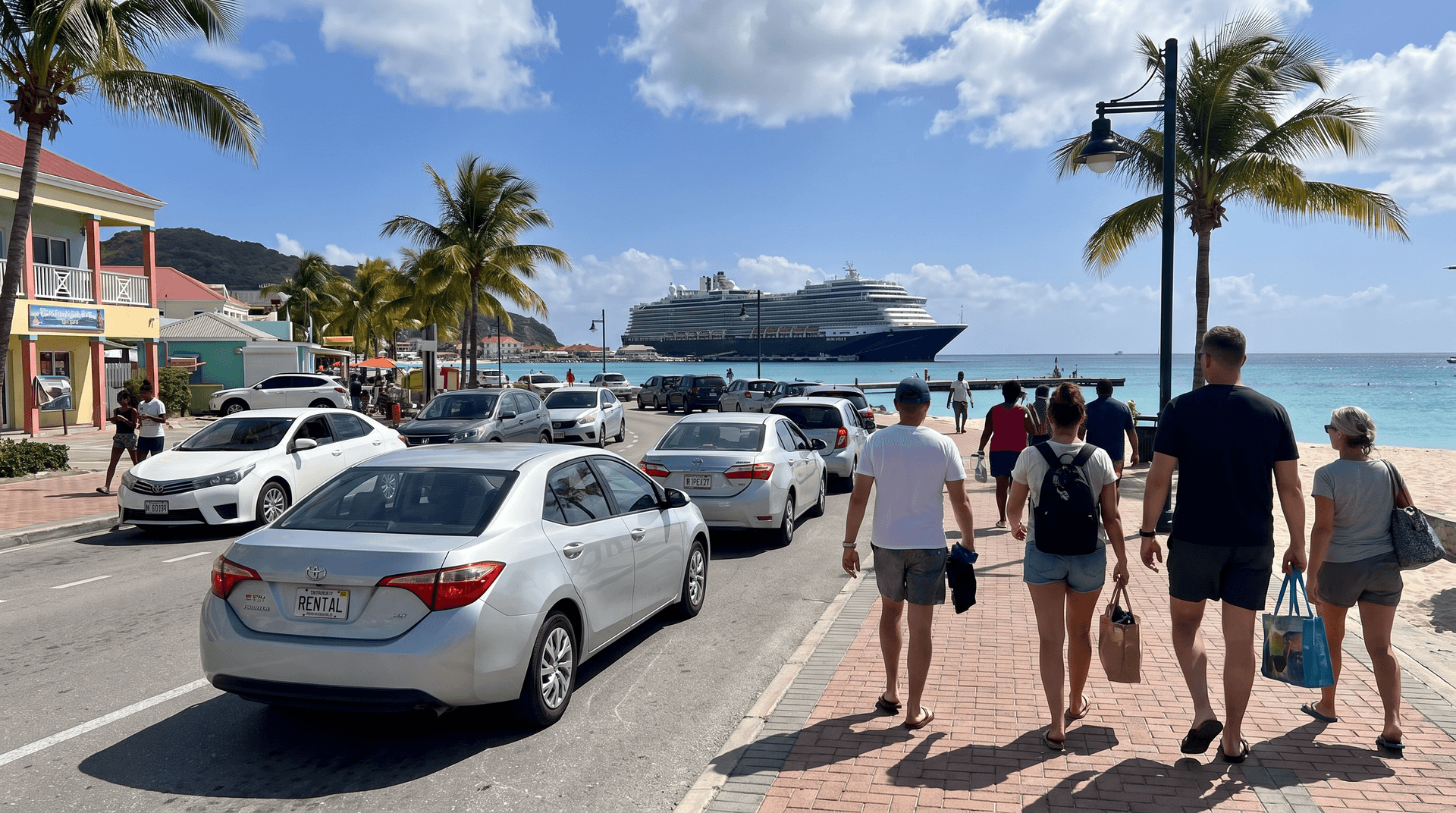
Airport Road is the main choke point, and it gets worst in the afternoon. Traffic heading from Maho or Cupecoy towards Simpson Bay or Philipsburg is slow after 4 p.m. Philipsburg fills up by mid-afternoon, which slows the return trip back through Simpson Bay. After 6 p.m. the roads clear considerably.
The Government of Canada warns that tourist season congestion is severe from December to April, which matches what drivers report on the ground. If you travel in that window, plan around it. Do your Philipsburg shopping in the morning, and keep the beach for the early afternoon. Go for dinner after the traffic has thinned.
A smart detour to Marigot
To reach Marigot from Simpson Bay or Maho, take the Lowlands road instead of the coast road. It adds a mile or two, and it can save about half an hour at busy times. Ask your host which route is currently flowing, because roadworks and bridge openings change the answer from week to week.
A day plan that avoids the worst traffic
Timing beats everything else on this island. Here is a simple plan for a day with a rental car, built on the busiest hours described above.
Start in Philipsburg in the morning, when Front Street is quiet and parking is easier. Walk the boardwalk along Great Bay, then drive west before the lunchtime crowds arrive. Around midday, stop at Maho Beach or Mullet Bay, and keep your bag with you rather than in the car. Afternoon is the time to cross to the French side, where Orient Bay has calm water and plenty of room to park. Leave the coast road early, since the stretch back towards Simpson Bay slows down after 4 p.m.
Finish with dinner in Grand Case or Simpson Bay once the evening traffic has cleared. If you stay on the French side for dinner, plan the drive home before the sun goes down, because secondary roads can be in poor shape. For a full list of beaches with parking notes, see our guide to St Maarten beaches by rental car.
If you drive to the airport
The flight home is where the bridge matters most. Add at least half an hour to your normal driving time from Philipsburg or the French side, return the car early, and keep the rental confirmation handy. Fuel the car before you head to the airport, because the road around the terminal is one of the slowest on the island in the afternoon.
Roads, weather and parking on the island
The main roads are in relatively good condition, according to the UK government. Roads can turn slippery in wet weather, and potholes appear, especially on unsurfaced roads. Signage is limited. The Government of Canada adds that secondary and rural roads can be in poor shape, and that driving conditions may be hazardous during the rainy season from October to February. Heavy rain turns dips and low bridges into puddles within minutes, so slow down early.
The steep roads up to Pic Paradis, the highest point of the island, are the main place where a higher car helps. The slopes are short but steep, and the surface is rougher than on the coast. A compact SUV or Jeep is more comfortable here. For everything else, a normal economy or compact car does the job.
Parking and towing
Parking rules are enforced in the busiest places. No-parking zones in Philipsburg and around the airport are actively policed by towing companies, and local guides quote a retrieval cost of roughly $50 to $60. Pay attention to painted curbs and signs, and do not assume that a spot is free just because other cars use it. At the busiest beaches, arrive in the morning if you want a spot close to the sand.
Theft from rental cars
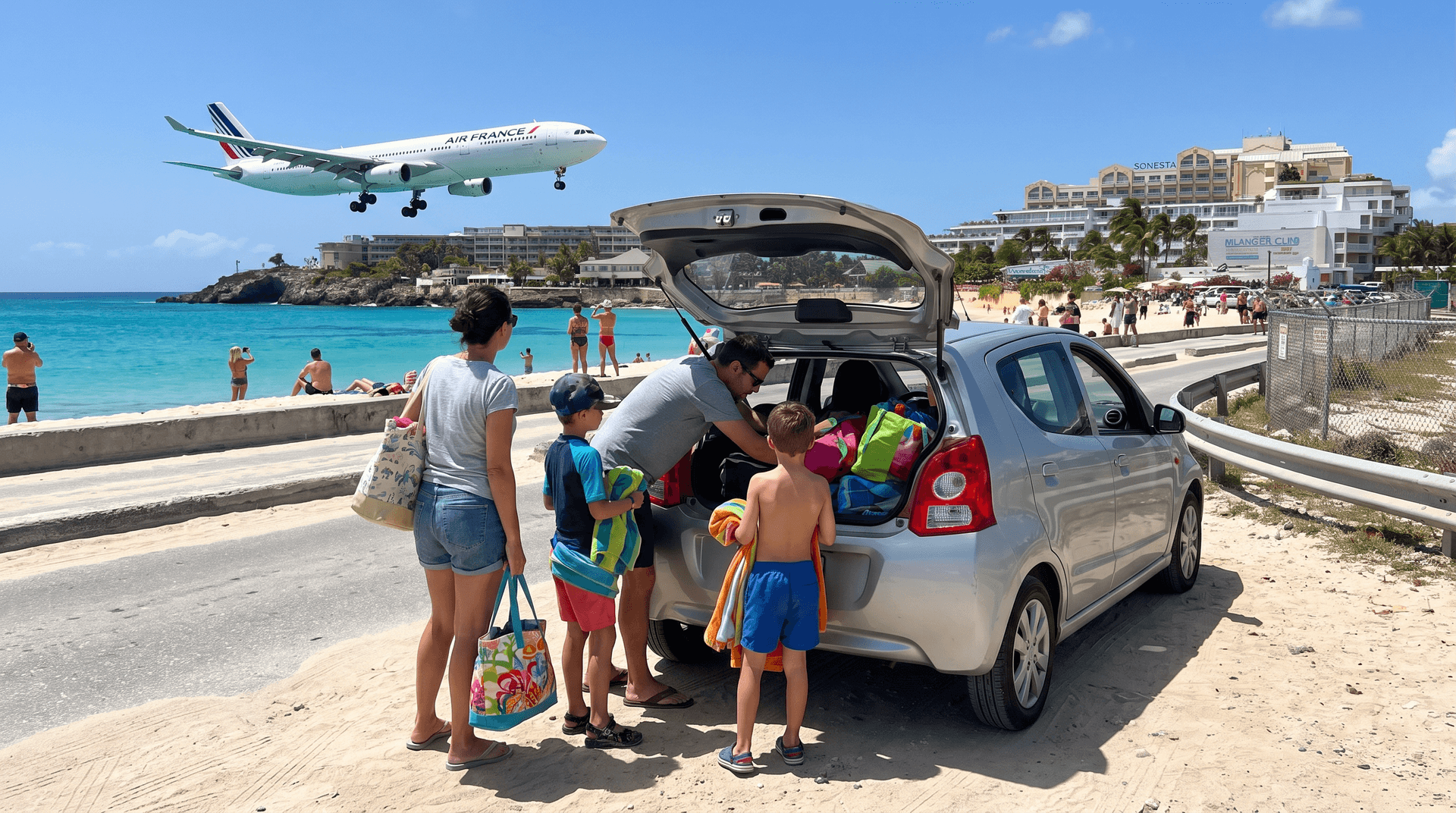
The Government of Canada notes reports of theft from vehicles, especially rental cars. Keep valuables out of sight, take your passport with you or lock it in the hotel, and never leave anything on the seats at a beach car park. Rental partners will tell you the same. It takes a second to carry your bag with you, and it saves your holiday from a broken window.
Driving habits to expect
Some drivers do not respect traffic laws and drive fast, according to the Government of Canada. Others stop in the middle of the road to talk to an acquaintance. A local guide suggests waiting about ten seconds before you honk. Keep your distance, use your indicators, and give pedestrians and scooters room.
One more habit worth copying from the locals is to check the time before every longer drive. A trip that takes ten minutes at 10 a.m. can take forty at 5 p.m., and the difference comes almost entirely from Airport Road and the bridges. Build your day around that, and the island feels as small as the map says it is.
Which rental car fits St Maarten, and what does it cost?
Most visitors pick a small car. St Maarten is only 88 square kilometres, the roads are short, and parking spots in Philipsburg and Simpson Bay are tight. A compact car also uses less fuel, and it fits the narrow French village streets better than a large SUV.
The table shows indicative daily rates for low to mid season. They are "from" prices for local operators compared with the international chains at the airport counter.
| Category | Local operators via TropicDrive (per day) | International chains at the counter (per day) |
|---|---|---|
| Economy | $25 to $35 | $50 to $70 |
| Compact | $30 to $40 | $55 to $75 |
| Intermediate/Midsize | $35 to $50 | $60 to $85 |
| SUV / Jeep | $45 to $75 | $80 to $120 |
| Minivan / 7+ seats | $60 to $90 | $100 to $150 |
Peak periods such as Christmas, New Year's and Carnival run 30 to 60 percent higher, so book early if you travel then. For ways to bring the price down, read our guide to cheap car rental on Sint Maarten.
Picking up at the airport
Princess Juliana International Airport (SXM) sits right on the Simpson Bay lagoon, which means the bridge traffic starts the moment you leave the terminal. Read our guide to renting a car at SXM airport for what to expect at pickup. The airport also publishes ground transport information on sxmairport.com.
The Government of Canada tells visitors to be careful when renting vehicles, especially on insurance and liability, and to get the details in writing. TropicDrive shows insurance, taxes and airport fees in the price upfront, so what you see is what you pay at the counter. See the official travel advice from the Government of Canada and the UK government safety advice for current road conditions.
How booking works
TropicDrive compares 30+ local operators on Sint Maarten in one search, with 1,000+ cars across the platform. You pay a small part online and the rest at pickup. Cancellation is free up to 48 hours before arrival, and payments run securely through Stripe with iDEAL, Wero or credit card.
Michael R. described the booking as easy, with great customer service. Jennifer L. said her local partner was so helpful that the team gave her great tips for exploring. That is the difference between a local operator and a chain. They know which road is blocked today and which beach is quiet. Read the full car rental guide for Sint Maarten or head straight to car rental on Sint Maarten to compare cars for your dates.
Frequently Asked Questions
Which side of the road do they drive on in St Maarten?
On the right, on both the Dutch and the French side. Traffic from the right has priority at unmarked intersections, and you give way to cars already on a roundabout.
Is driving in St Maarten difficult?
Not for most travellers. The roads are short and mostly paved. The hard parts are the afternoon traffic on Airport Road, the Simpson Bay bridge openings and the lack of signs at small intersections. Leave extra time before flights and dinner reservations.
Do I need an international driving permit?
Usually not for US, Canadian or EU licences with local rental partners. The Government of Canada recommends carrying one anyway. Always carry the original licence and photo ID.
Can I take my rental car to the French side?
Yes. There is no border control between Sint Maarten and Saint-Martin, and you can drive across freely. Prices on the French side are in euros.
When is traffic worst on St Maarten?
Afternoons are the busiest, especially after 4 p.m. on Airport Road between Maho, Simpson Bay and Philipsburg. The high season from December to April adds congestion. Roads clear after 6 p.m.
What happens when the Simpson Bay bridge opens?
Traffic on Airport Road stops for up to fifteen minutes, sometimes longer. Ask your hotel or rental partner for the current opening times and leave early for the airport.